
AEO vs SEO
AEO focuses on being selected, summarized, and cited inside answer engines. SEO focuses on earning crawlable, indexable visibility in search results. The strongest strategy treats AEO as a measured extension of SEO: use SEO foundations for discovery, then track prompts, providers, sources, and citations to see whether answer engines repeat your evidence. Best used for teams deciding how AI-answer work fits their existing SEO program.
Use this comparison as a working definition. Google says AI features still rely on foundational SEO and Search Console performance data, while PromptScout separates prompt and provider visibility so AI-answer movement can be measured directly.
How do AEO and SEO differ?
| Decision point | AEO | SEO |
|---|---|---|
| Goal | Get cited, mentioned, or recommended when answer engines synthesize a response. | Earn rankings, snippets, and clicks from crawlable search result pages. |
| User intent | Question, recommendation, comparison, and task prompts where the user expects a direct answer. | Keyword searches where the user scans result pages, snippets, and links. |
| Measurement | Appearance Rate, Share of Voice, Citation Presence, Citation Rank, provider split, prompt cluster split. | Impressions, clicks, rankings, CTR, indexed pages, and Search Console query/page movement. |
| Signals | Answer-first sections, extractable tables, evidence-backed claims, source diversity, freshness, and prompt fit. | Crawlability, indexation, helpful content, internal links, structured data, performance, and authority. |
| PromptScout workflow | Monitor fixed prompts by provider, inspect sources, compare competitors, and report citation movement. | Use SEO tools and Search Console to confirm crawl/index health and search demand. |
| When not to use the term | Do not call every AI-written article AEO; AEO is about answer eligibility and measurement. | Do not call private AI-answer visibility SEO unless the work is tied back to search/indexable assets. |
Is AEO replacing SEO?
No. AEO depends on many SEO fundamentals because answer engines need accessible, trustworthy source material. Google also states that pages need to be indexable and snippet-eligible to appear as supporting links in AI features. The practical move is to keep SEO foundations healthy and add prompt/provider measurement on top.
- Keep important pages crawlable, indexable, internally linked, and written for the intended audience.
- Use AEO when the user asks a direct question and expects a synthesized answer.
- Measure AI-answer presence separately because Search Console does not expose every answer-engine prompt as its own report.
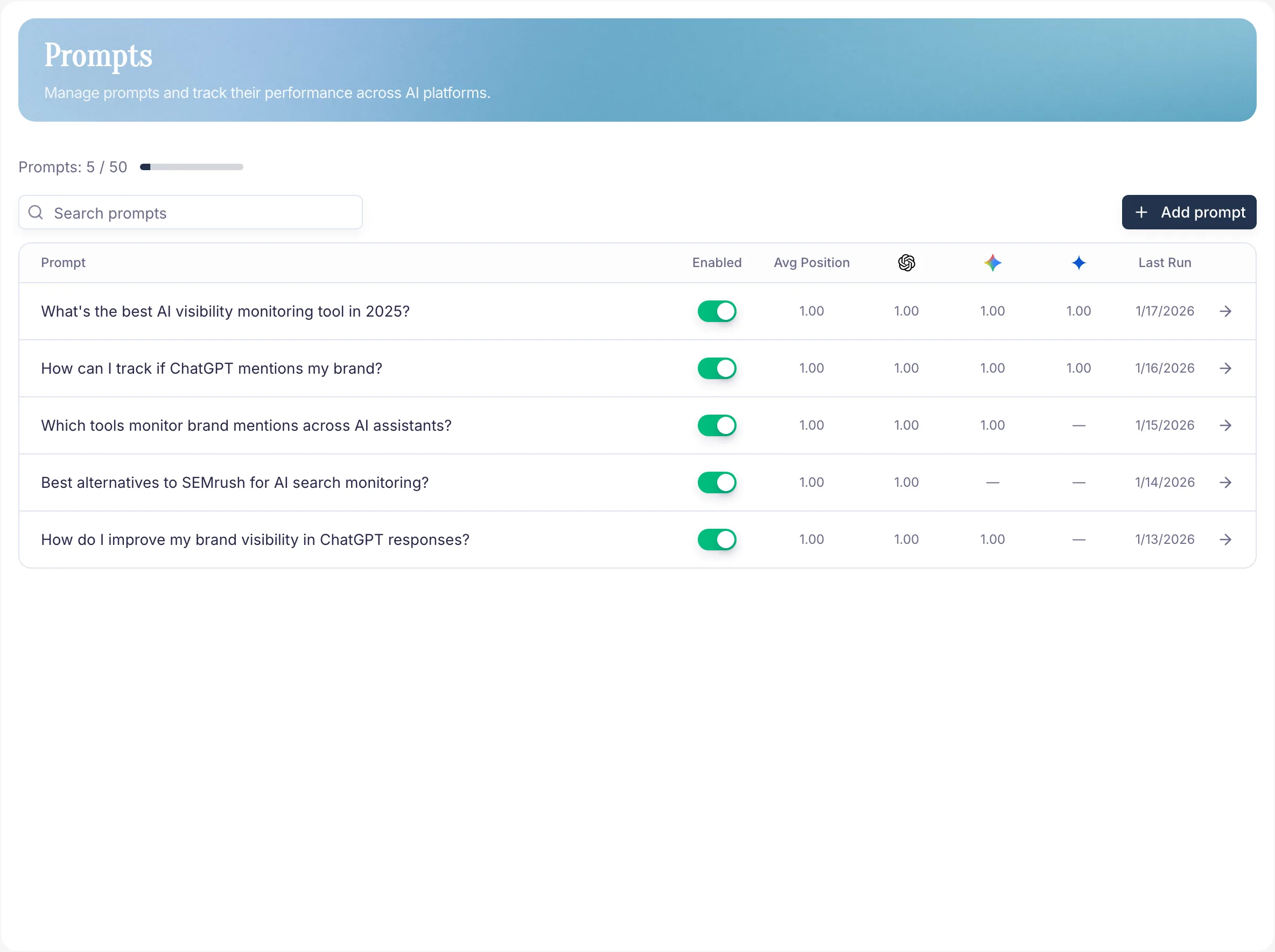
How does PromptScout monitor AEO separately from SEO?
PromptScout starts with the prompts buyers actually ask, then runs them across supported providers and stores the response, brand mentions, cited URLs, and competitor context. That creates a repeatable layer for AEO: the same prompt cluster can be tracked over time instead of relying on one manual ChatGPT check.
- Prompt-level monitoring shows which questions mention the brand, competitors, or neither.
- Provider splits expose differences across ChatGPT, Gemini, Google AI Overviews, and Perplexity.
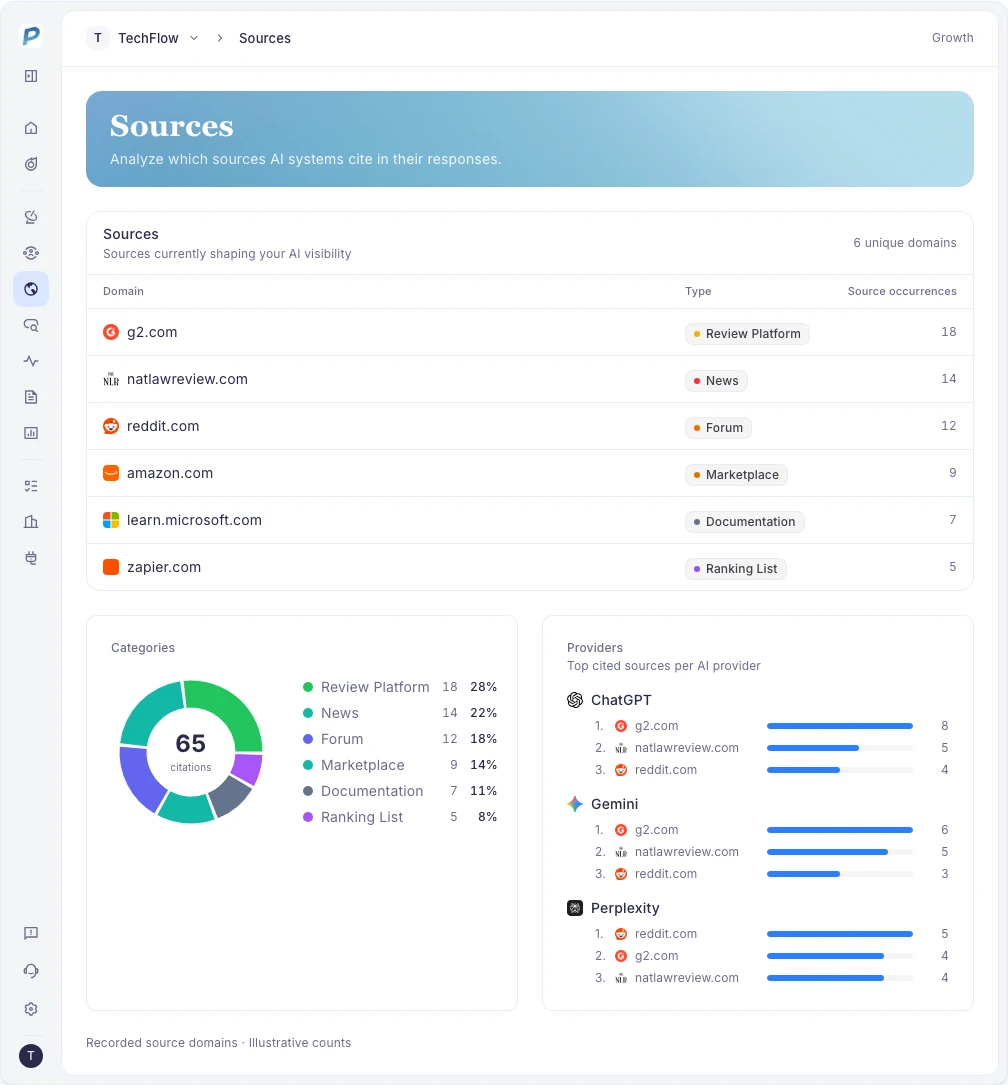
- Source review shows whether answers cite owned pages, reviews, communities, editorials, or documentation.
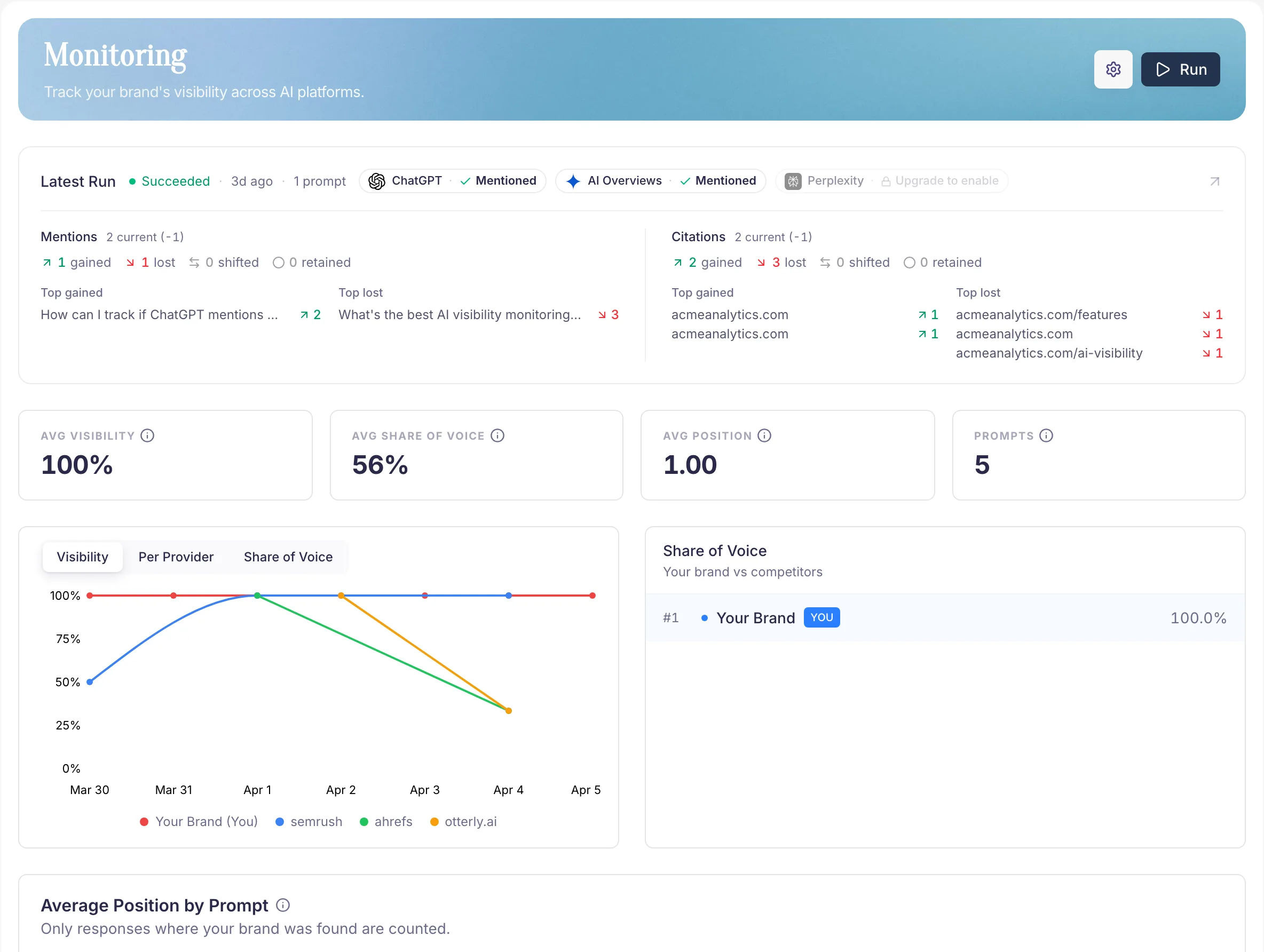
What should teams measure beyond Search Console?
Search Console remains the source for Google Search performance, including AI features within the Web search type. AEO needs additional tracking because answer engines vary by provider, prompt, industry, and intent. PromptScout reports Appearance Rate, Share of Voice, Citation Presence, Citation Rank, provider split, prompt-cluster split, and source-category mix.
- Use Search Console for crawl, index, page, query, click, and impression diagnosis.
- Use PromptScout for prompt/provider visibility and citation evidence that GSC does not isolate.
- Avoid one-size-fits-all AI citation claims; source patterns differ by market and intent.
Which prompt intents are AEO, SEO, or mixed?
Most real buyer prompts are mixed. A direct definition prompt leans AEO, a keyword landing page still leans SEO, and a comparison prompt usually needs both. The next action should match the intent: write an extractable answer, improve the indexable page, or publish a table that connects the two.
- "What is answer engine optimization?" is AEO-led: answer first, then cite methodology and examples.
- "best AI visibility tools for agencies" is mixed: build an indexable comparison page and monitor AI recommendations.
- "PromptScout pricing" is SEO-led with AEO implications: keep the page crawlable, clear, and consistent with answers.
- "how do I measure AI citations?" is AEO-led: define the metric and show the evidence workflow.

Frequently Asked Questions
Is AEO replacing SEO?
No. AEO extends SEO into answer-engine surfaces. Search fundamentals still matter because answer engines need crawlable, reliable, snippet-eligible evidence to cite or summarize.
How do I measure AEO?
Track fixed prompts across providers, then measure Appearance Rate, Share of Voice, Citation Presence, Citation Rank, source mix, and prompt-cluster movement over time.
Should SEO teams own AEO?
Usually yes, with support from content, product marketing, and PR. SEO teams already manage indexable evidence, but AEO adds prompt selection, provider comparison, and citation analysis.
Related Guides and Next Steps
Use these resources to compare options, improve AI visibility, and move toward implementation.
PromptScout for Agencies
Package multi-brand AI visibility monitoring for client reporting across supported providers.
See pricing or create account
Run a Free AI Visibility Check
Preview three buyer questions, then sign up to run three free AI answers. Ongoing monitoring requires a paid plan.
See pricing or create account
AI Visibility Pricing Plans
Compare plans and start monitoring AI visibility with the right tier.
See pricing or create account
The AEO and GEO Guide
A four-part guide to how AI answers choose sources, what you can influence, and how to measure it, with first-party monitoring data.
Read guide
AI Monitoring Tools Comparison
Compare AI monitoring tools by provider coverage, prompt workflows, competitor tracking, and reporting fit.
Explore feature
Optimize for AI Answers
Improve machine readability and answer quality signals for AI systems.
Read guide
Related Features
What is GEO?
Learn what Generative Engine Optimization (GEO) is, how it overlaps with AEO and SEO, and how to monitor your brand in AI search results.
Explore What is GEO?GEO Tools
Find AI visibility gaps and turn source evidence into focused content work with GEO and AEO tools. Start free; choose a paid plan for ongoing monitoring.
Explore GEO ToolsAI Citation & Source Tracking
Inspect source URLs, displayed citations, recurring domains, and page types in monitored AI answers. Review brand context with PromptScout, starting on Starter.
Explore AI Citation & Source Tracking