
Optimize for AI Answers
To optimize for AI answers, start with the prompts your buyers actually ask, measure how ChatGPT, Gemini, Google AI Overviews, and Perplexity answer them today, improve the pages and sources those answers can use, then rerun the same prompts. There is no magic AI ranking factor; the useful work is a repeatable evidence and measurement loop.
- No credit card required
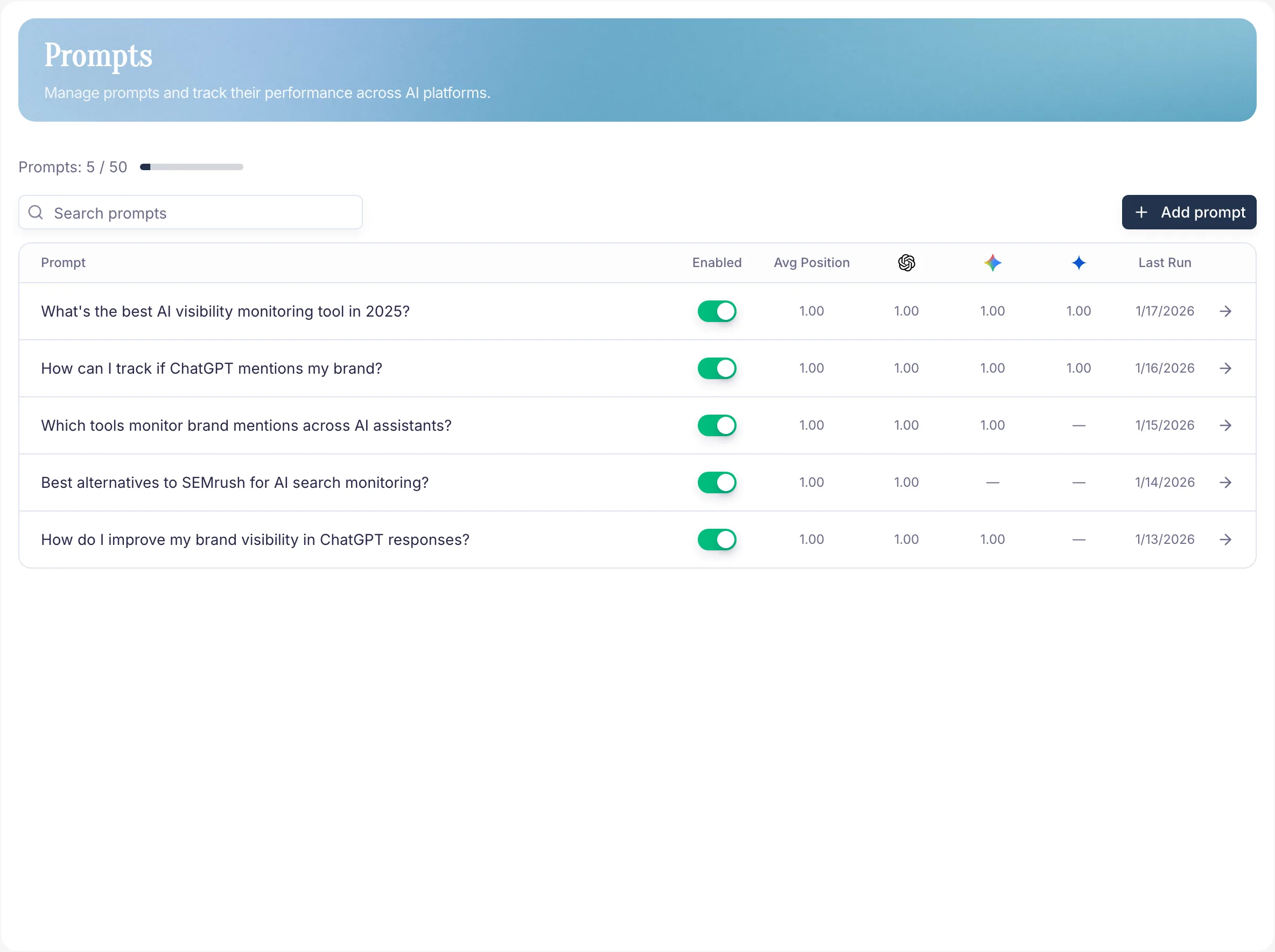
Direct workflow: prompts, baseline, sources, pages, rerun
Use a fixed prompt list before changing content. Run baseline monitoring, inspect cited sources, audit owned pages for crawlability and textual evidence, improve extractability, then rerun the same prompts and compare provider-level movement. Google says AI features rely on the same crawlable, indexable, textual web foundations as Search, while PromptScout adds the repeatable prompt evidence layer.
- Choose target prompts from buyer questions, comparison prompts, pricing prompts, and category evaluation prompts
- Run a baseline monitor so Appearance Rate, Share of Voice, Citation Presence, and Citation Rank have a starting point
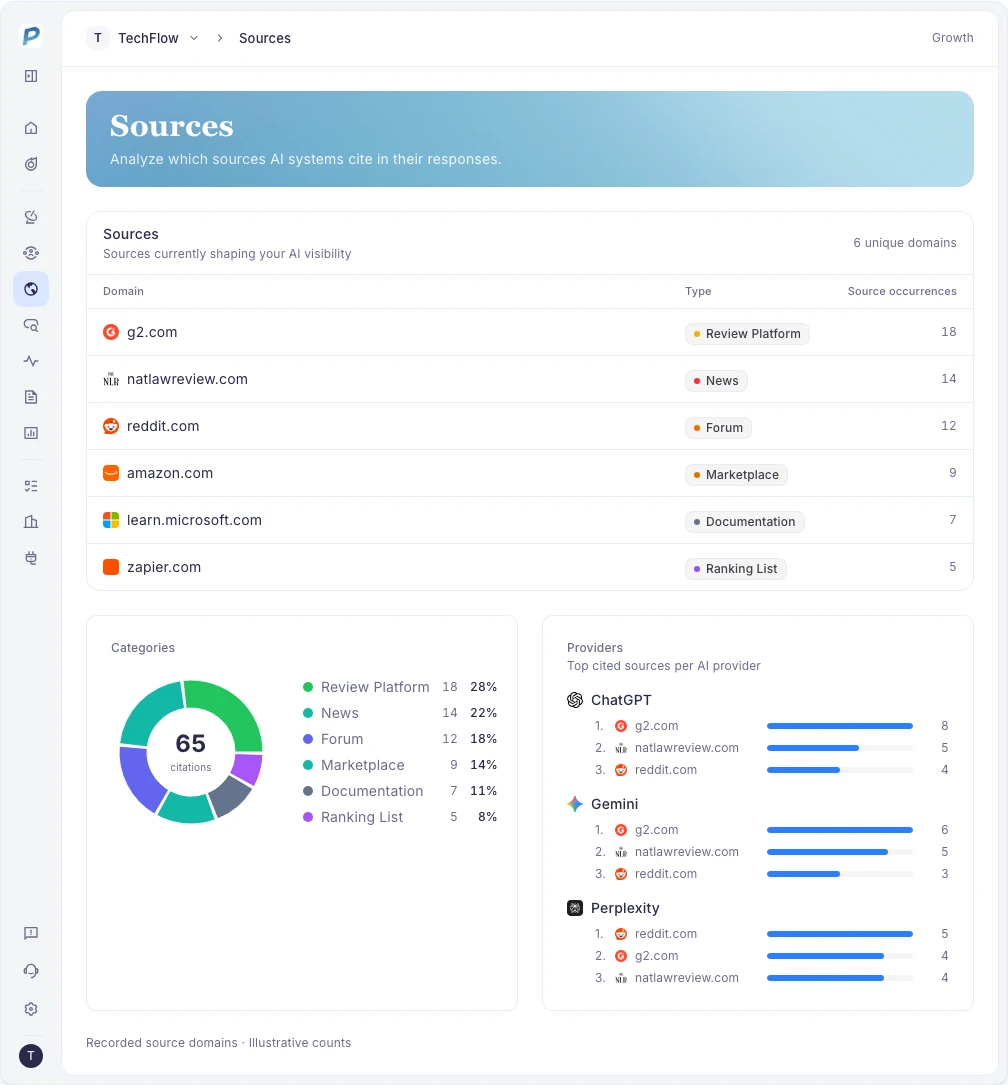
- Review cited URLs and source-category mix before deciding whether the gap is owned content, third-party evidence, or crawl access
- Rerun the same prompts after changes so movement is compared against the original provider split and prompt-cluster split
Checklist for pages that AI answers can use
The strongest candidate pages are easy to crawl, easy to quote, and useful to a human who wants the answer now. Treat this as an editorial checklist, not a promise that one edit causes a citation.
- Page structure: lead with the direct answer, then expand with steps, examples, caveats, and supporting links
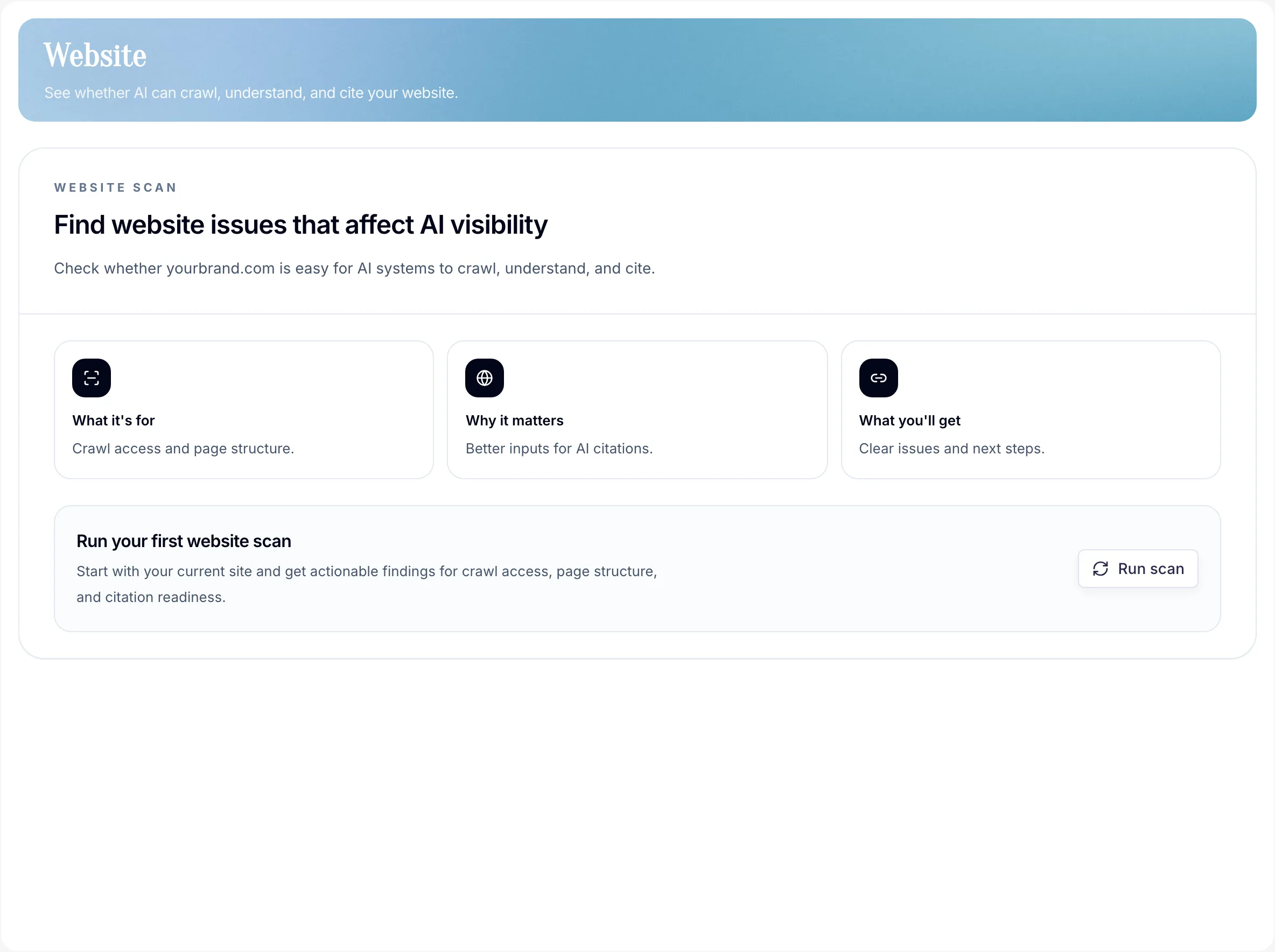
- Crawlability: keep important content indexable, internally linked, textual, and not hidden behind scripts or blocked user agents
- Source evidence: include methodology, dates, examples, screenshots, and clear links to supporting proof
- Comparison tables: make differences and tradeoffs explicit instead of burying them in generic paragraphs
- Freshness: show when facts, benchmarks, or workflows were last reviewed, especially for provider-specific behavior
- Measurement loop: record the prompt set and content changes so later monitor runs can be interpreted without guessing
| Check | What good looks like | PromptScout evidence |
|---|---|---|
| Page structure | Direct answer first, then steps, caveats, examples, and comparison details | Prompt cluster and page-level content review |
| Crawlability | Indexable, internally linked, textual, and not blocked for core crawlers | Website tab crawl, robots, sitemap, and raw HTML checks |
| Source evidence | Methodology, dates, screenshots, examples, and supporting citations are visible | Citation Presence, Citation Rank, and source-category mix |
| Freshness | Substantive updates are dated when provider behavior or data changes | Repeated monitor runs against the same prompt set |
| Measurement loop | Baseline, edit log, rerun, and provider-level comparison are preserved | Appearance Rate, Share of Voice, and provider split |
Proof block: what to measure without overstating causality
PromptScout proof should report observed answer patterns: Appearance Rate, Share of Voice, Citation Presence, Citation Rank, provider split, prompt-cluster split, and source-category mix. If a page changes and later visibility improves, describe the timing and repeated observations; do not claim a single content edit caused the model to change.
- Appearance Rate shows how often the brand appears in the fixed prompt set
- Share of Voice compares de-duplicated brand appearances against the competitor roster
- Citation Presence and Citation Rank show whether owned or external URLs appear when citations are available
- Provider and prompt-cluster splits prevent one blended score from hiding where the pattern actually changed
Sources behind the workflow
This workflow combines PromptScout Website tab evidence with current public search guidance and AI-citation research. Google emphasizes crawlable, indexable, textual content for AI features; Search Engine Land and Tinuiti report that citation patterns vary by platform, industry, and intent; Cleanlist's Q1 2026 B2B dataset reported higher citation rates for pages with explicit comparison tables and numeric proprietary data.
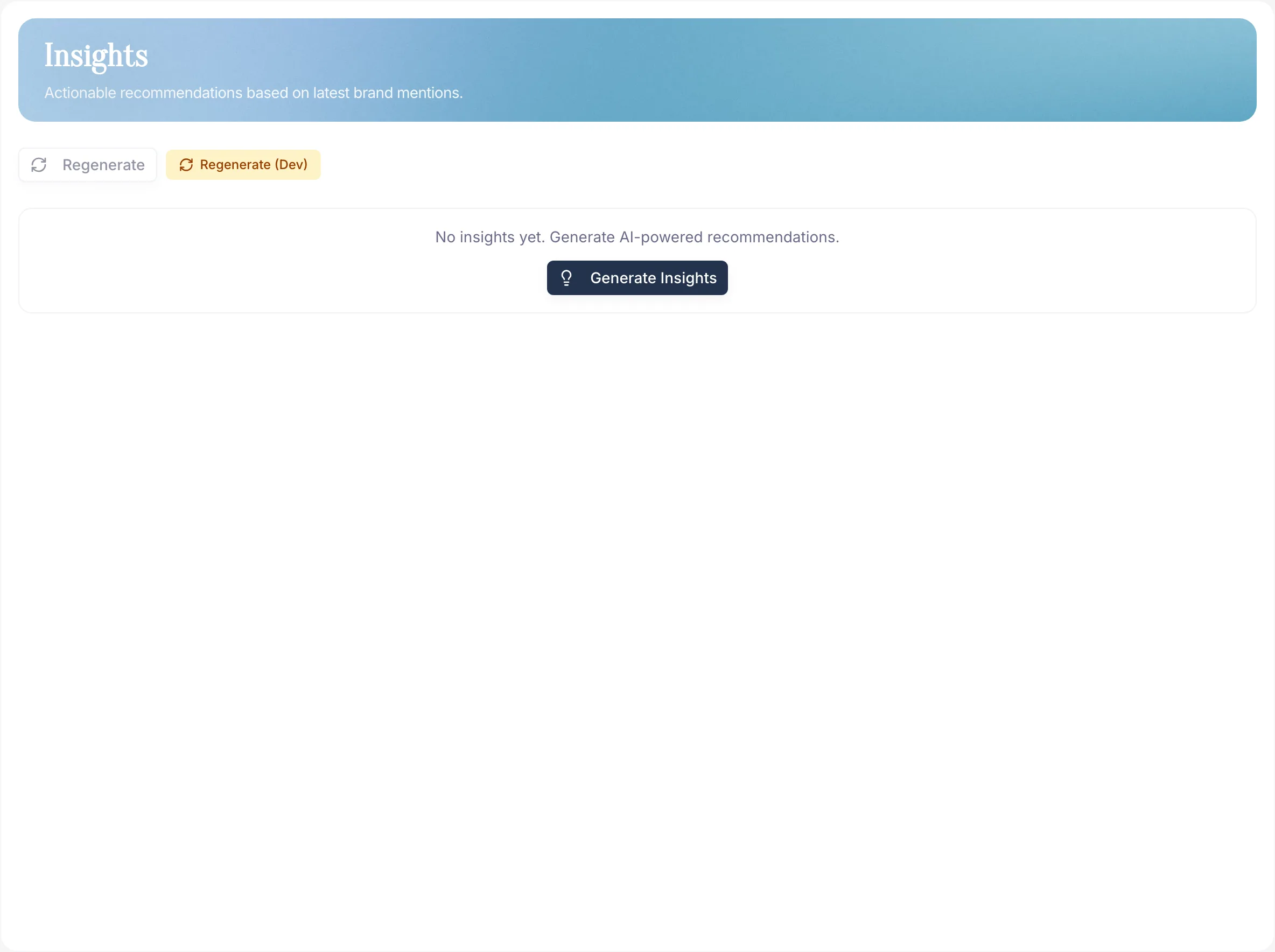
- Use PromptScout Website checks to connect monitored prompts and citations to owned-page evidence
- Use source-category mix to decide whether the next move is owned content, third-party proof, or community/review coverage
- Use documented methodology and sample sizes whenever you publish evidence externally
Related Guides
Explore these guides to learn more about AI visibility, optimization strategies, and best practices.
AI Visibility Improvement Workflow
Actionable playbook for improving recommendations across AI assistants.
Read guide
The AEO and GEO Guide
A four-part guide to how AI answers choose sources, what you can influence, and how to measure it, with first-party monitoring data.
Read guide
PromptScout for Agencies
Package multi-brand AI visibility monitoring for client reporting across supported providers.
See pricing or create account
AEO and SEO Comparison
Understand how AI SEO differs from traditional SEO workflows.
Read guide
AI Brand Visibility Workflow
Use recurring prompt tracking to measure how your brand's AI visibility changes week to week.
Explore feature
AI Monitoring Tools Comparison
Compare AI monitoring tools by provider coverage, prompt workflows, competitor tracking, and reporting fit.
Explore feature
Frequently Asked Questions
Is there a special way to optimize only for AI Overviews or AI Mode?
No. Google's public guidance says AI features use the same fundamental Search requirements. PromptScout's workflow focuses on crawlable pages, useful textual evidence, and repeated prompt measurement across providers.
How soon should I expect AI answer visibility to change?
Treat timing as an observation, not a guarantee. Rerun the same prompt set after meaningful content or source changes and compare provider-level movement over multiple checks.
Related Features
AI Citation & Source Tracking
Inspect source URLs, displayed citations, recurring domains, and page types in monitored AI answers. Review brand context with PromptScout, starting on Starter.
Explore AI Citation & Source TrackingAI Brand Monitoring
Track brand mentions in AI answers with PromptScout. Review answer context, competitors, and provider results over time. Included from the Starter plan.
Explore AI Brand MonitoringAI-Powered Visibility Insights
Turn monitoring evidence into Opportunities across ChatGPT, Gemini, AI Overviews, and Perplexity with actions grounded in observed prompts and sources.
Explore AI-Powered Visibility Insights