
AI search monitoring guide
How do I set up ongoing monitoring for AI search results?
Keep the question, provider, evidence, and review window together. You will see what changed and what to do next.
Published by PromptScout · Updated September 12, 2026
Provider coverage
 ChatGPT
 Gemini
 AI Overviews
 Perplexity
 Bing CopilotNEW
TL;DR
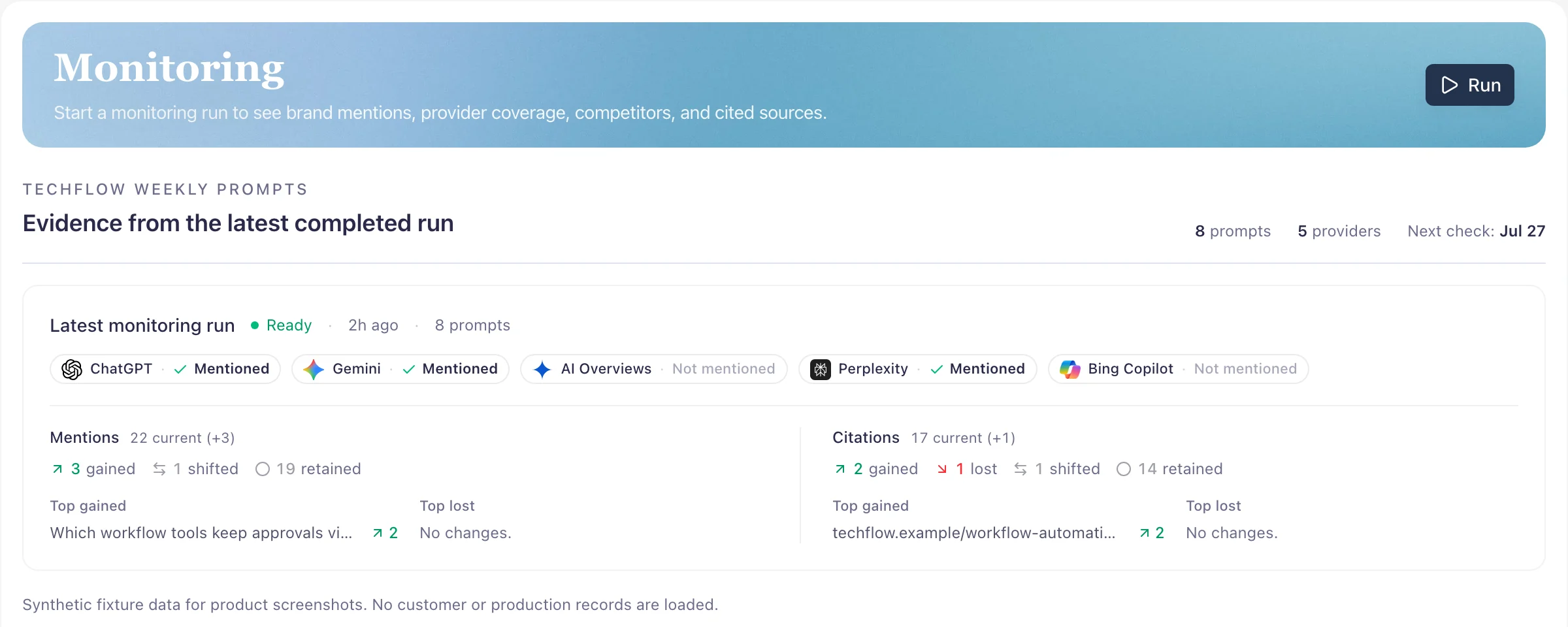
Choose a stable set of buyer questions. Run them across the providers your buyers use. Review mentions, competitors, citations, and sources after each run, then compare the same cohort over time.
01
Pick the questions
Use questions from sales conversations, customer research or available search-query data. Preserve the situation that changes the answer: team size, budget, compatibility or setup constraints. For example, "How can a solo SaaS founder track AI recommendations without a dedicated analyst?" is an illustrative buyer question, not a measured demand claim.
Start with a set you can review consistently. Keep question wording stable and label branded questions separately from category and comparison questions. There is no special question length that makes an assistant cite you.
02
Keep the cohort stable
Use the same questions and providers, and record run dates and any available model, language and location context. Keep missing or failed provider responses separate from completed answers that omit your brand. Review on your plan's schedule; a single answer is an observation, not a trend.
03
Turn evidence into work
Inspect the closest existing page before drafting another. If it already answers the buyer's question, improve the supported facts, comparison criteria or explanation on that route. Put a useful answer near the start with the qualifications needed to understand it. Add a contextual link from a relevant existing page when it helps readers reach the answer.
Complete one evidence-backed Opportunity and record the exact page, substantive change and publication date. Create a new page only when it serves a distinct reader decision. Neither a new date nor a fixed number of links establishes an improvement.
04
Measure discovery and outcomes separately
Compare the same prompt and provider cohort after publication. Record brand mentions, owned citations and recommendations separately from qualified AI referrals and conversions. A citation does not establish that a reader visited, and a visit does not establish that they became a customer. Keep unavailable data marked unknown.
For organic search, compare branded and non-branded query groups using the same filters, date-window length and page scope. Search Console includes Google's AI features in Web reporting, so total search clicks are not a standalone AI-citation measure. Preserve the baseline and note other changes; before-and-after movement alone does not prove that your edit caused it.
Scope and limitation
PromptScout observes generated answers; it does not control what an AI provider says or guarantee a visibility outcome. It prepares evidence and content briefs, but it does not directly rewrite or publish your website content.
Start with your own prompt evidence
Set up the questions that matter to your buyers, then compare the same evidence over time.