Inspect a source
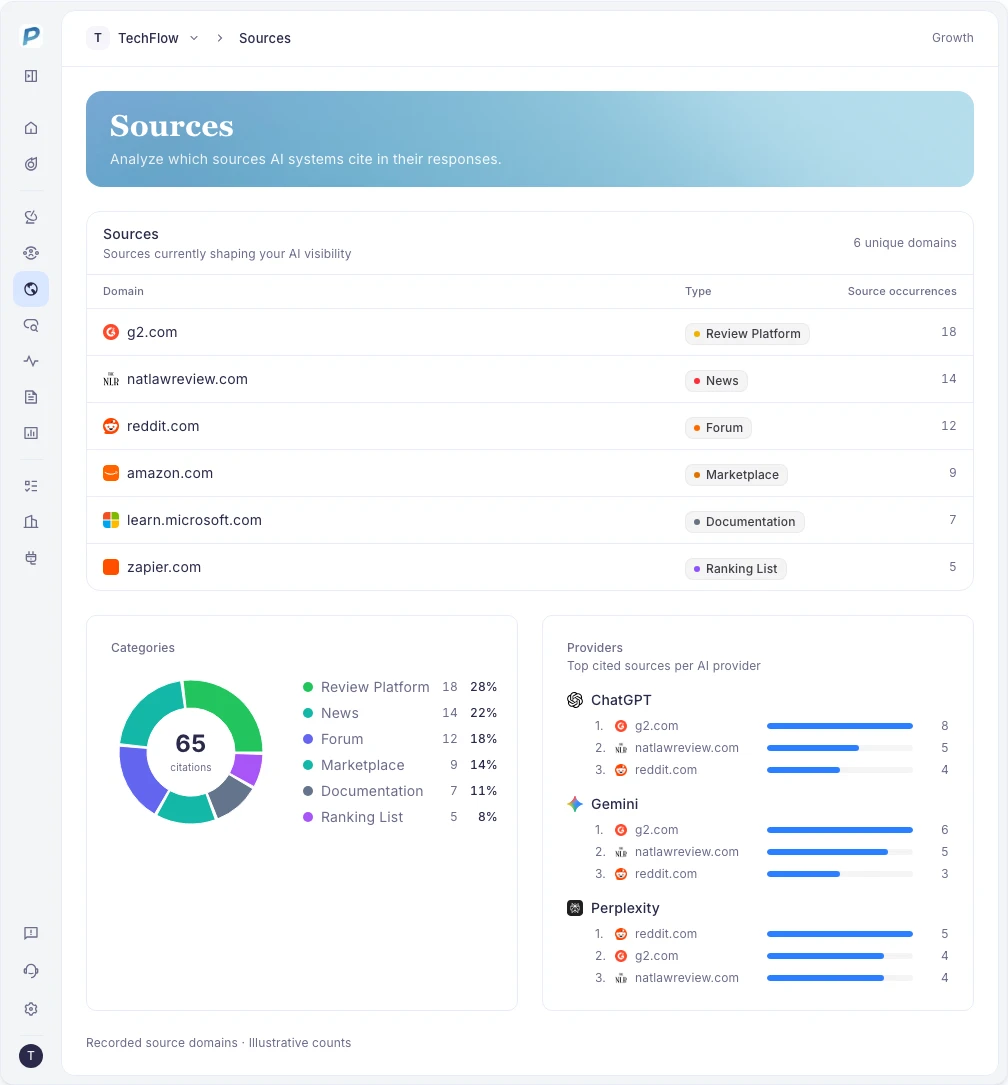
Sources groups the URLs returned with monitored answers by domain, provider, and category. Open a source to inspect the page and the responses associated with it.
- Displayed citation: a link shown with the provider's answer.
- Returned source URL: a page in the provider's source list. It may not have appeared as a displayed citation.
- Linked brand mention: a link attached to a brand name. The linked-domain view keeps this separate from answer citations.
A source URL does not establish that the provider read, trusted, or used the page. Use the recorded source type and original answer to interpret it.
Compare domains and page types
- Choose questions where your brand or a competitor appears.
- Review recurring domains and individual URLs.
- Compare source categories, such as reviews, documentation, comparison pages, and forums.
- Open relevant pages and record which claims address the buyer's question.
Reddit details can include threads, communities, or authors when the returned URL and available enrichment support them. Missing enrichment means those details are unavailable.
Read positioning attributes
Competitor language to watch shows phrases from the latest generated analysis, with provider context and available excerpts. Positioning attributes describe qualities assigned to a brand, such as an audience, use case, or product capability.
Check the original wording before treating an attribute as accurate. Some answers contain no useful positioning detail. Read the positioning feature page for examples.
Use the evidence
Source analysis and positioning attributes are included from Starter. Compare the pages and descriptions with your own content to find claims that need clearer support.
Growth and higher add Opportunities and Content Briefs. Use the cited or returned URL that supports the specific content decision. A source gap can suggest work to investigate; it does not prove why a competitor was recommended.